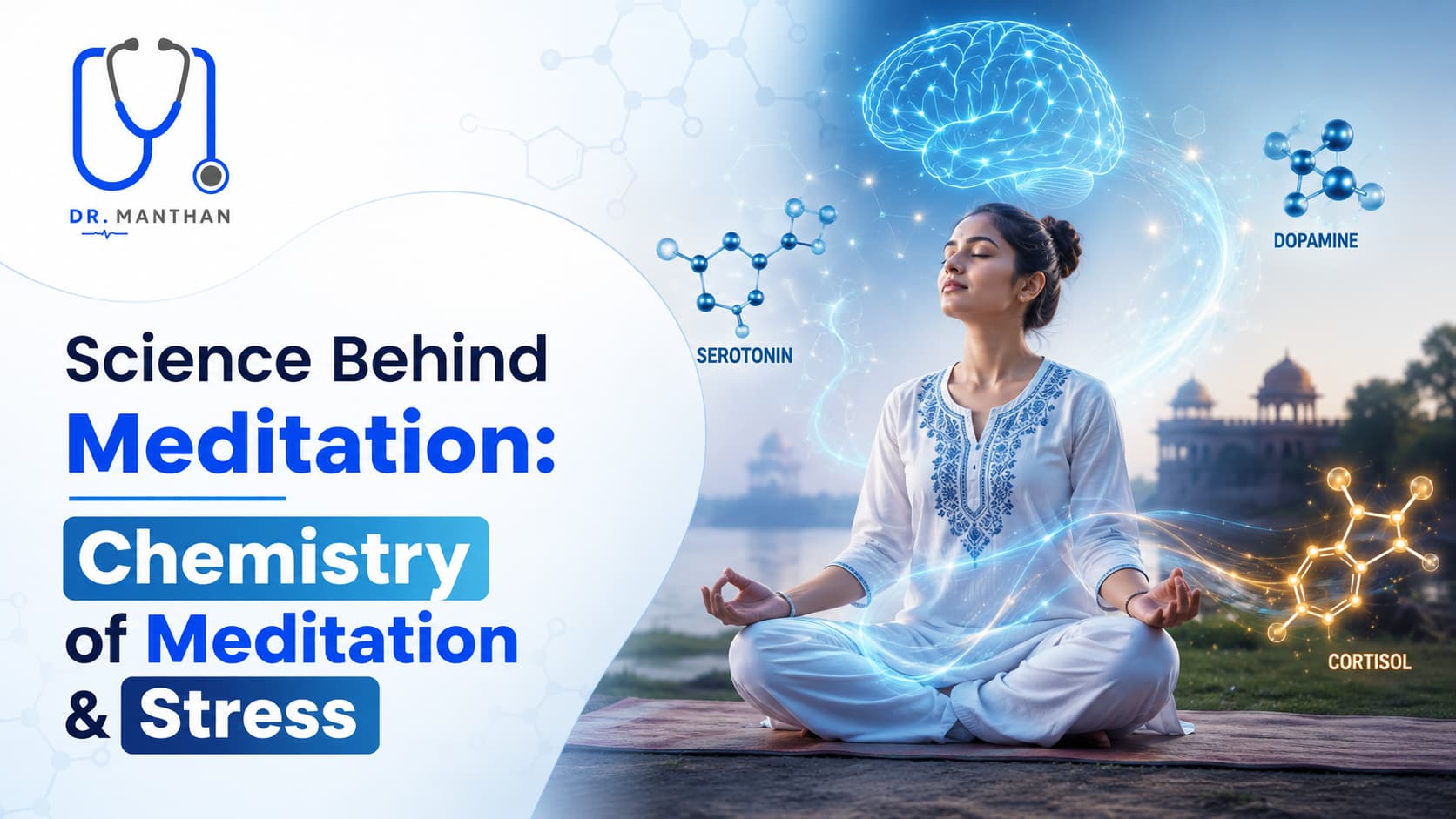
Science Behind Meditation: Brain Chemistry of Meditation
Life in modern India moves at a very fast pace. You might face the heavy traffic of Mumbai every single day. Perhaps you balance tight deadlines in Bengaluru's tech offices. You may also manage deep family commitments at home. Either way, tension has become a regular guest in our households.
When daily tasks pile up, your body starts an ancient alarm system. Your chest feels tight. Your heart beats faster. Your mind spins out of control. This is not just a mental feeling. It is a major physical event. Many workers search online for how to reduce stress mentally. They look up new stress management techniques to escape this constant tiredness.
For generations, traditional Indian wellness habits have stressed the value of a quiet mind. Today, advanced brain scans show us exactly why these habits work so well. Modern medicine proves that mindfulness and stress reduction do more than just make you feel relaxed.
They are real physical changes that alter your brain structure. By learning the true science behind meditation, you can protect your long-term health. Exploring the clear brain chemistry of meditation shows how simple mindfulness exercises lower stress. They also improve your mental focus. Practicing the science behind meditation lets us change our physical body on purpose.
How Stress Affects the Body
To see how mental training heals the body, we must look at our internal alarm system. We need to see what happens when it stays on all day long. The moment your brain senses trouble, it starts a chemical pathway. Doctors call this path the Hypothalamic-Pituitary-Adrenal axis.
This chain reaction signals your adrenal glands. They flood your body with adrenaline and cortisol. For people searching for the benefits of daily meditation, learning about this survival system is vital. It shows why daily practice matters so much. The science behind meditation proves that mental stillness cuts down this chronic hormone activity.
In short bursts, this body reaction saves lives. It gives you the sharp focus needed to handle a sudden emergency. However, modern life pressures do not disappear in a few minutes.
When you worry constantly about money, family, or work, that chemical path stays wide open. This leaves a steady, harmful leak of cortisol in your blood. This constant chemical leak explains why people look up how to control overthinking. They want to protect their physical health. By using the basic rules of the science behind meditation, you can stop this daily chemical leak.
Over time, high cortisol levels harm your body's health. It ruins your sleep choices. It weakens your immune defenses. It also causes long-term body swelling.
Controlling this hormone is a major medical goal for patients in India. This is because health issues like type 2 diabetes, high blood pressure, and heart strain are very common here. Constant worry does not just drain your emotional energy. It ages your cells faster and weakens your body's lines. Using proven mindfulness exercises for anxiety can lower these health risks. This daily habit proves the value of the science behind meditation.
Brain Chemistry of Meditation
As a doctor, one of the most exciting facts in modern brain science is neuroplasticity. This word means the brain can change its shape based on your daily actions. Your brain is not a stiff piece of computer hardware. Instead, it is dynamic and easy to mold.
Advanced tools like functional Magnetic Resonance Imaging show that regular meditation changes specific brain areas. These zones handle your emotions and your thinking speed. People reading about meditation for beginners are often surprised by these quick changes. They see these structural gains clearly when they study the science behind meditation.
Medical studies show clear structural shifts in four main parts of the brain:
The Amygdala
This small, almond-shaped zone acts as the alarm box of the brain. It handles fear and your basic survival choices. Under heavy daily pressure, the amygdala grows thicker. This growth leaves you in a state of high fear and quick anger.
Regular mindfulness flips this switch. It shrinks the physical size of this zone. This shrinkage cuts down your automatic panic reactions. This deep shift explains why mindfulness for stress reduction works so well at a cell level. It reveals the clear science behind meditation.
The Prefrontal Cortex
This area sits right behind your forehead. It acts as the main boss of your brain. It guides your choices, your focus, and your moods. Long-term worry weakens this vital front zone.
In contrast, regular meditation thickens the prefrontal cortex. This gives you the power to handle life with calm logic instead of raw fear. This structural growth answers the common question of how to improve mental focus during hard work tasks. The science behind meditation validates this fact.
The Hippocampus
This inner area holds your memory power and your learning skills. Sadly, high cortisol levels can damage this section easily. High stress can hurt your memory as the years pass.
Brain scans show that steady meditation keeps this area thick and healthy. This process protects your long-term memory skills. For readers checking out the benefits of deep breathing, keeping your memory safe is a huge plus. The science behind meditation confirms this deep benefit.
The Anterior Cingulate
The Anterior Cingulate Cortex helps you direct your focus. It also keeps your mind flexible. Building up this zone through daily mindfulness helps you spot bad thoughts early.
You can watch them pass without getting stuck in a loop of worry. People activate this area when they practice the scientific benefits of meditation. It raises your emotional strength and proves the science behind meditation.
Chemicals That Reduce Stress
The structural shifts in the brain come with a major change in its chemical supply. Neurotransmitters are the messengers that help brain cells talk to each other. They control how you sleep, how you feel, and how you focus every day. Learning the brain chemistry of meditation requires looking at three vital chemicals. They show the absolute science behind meditation.
Gamma-Aminobutyric Acid
Think of Gamma-Aminobutyric Acid, or GABA, as your brain's natural chill pill. It is a calming chemical designed to quiet down hyperactive brain cells. It stops endless mental noise. Low GABA levels are a clear sign of high anxiety and bad sleep.
Medical tests show that focused meditation sets off GABA production. This helps soothe a stressed mind. This chemical lift is a core part of standard stress relief methods. It is a primary driver in the science behind meditation.
Serotonin and Dopamine
These two chemicals are vital for a steady mood and inner drive. Serotonin keeps your daily outlook bright and positive. Meanwhile, dopamine guides your focus and your inner reward feelings.
Chronic worry drains these chemical stores very fast. This loss leads to total exhaustion and mental burnout. Mindfulness keeps your serotonin and dopamine levels steady. It stops your mood from dropping suddenly. This balance shows why mental health and the science behind meditation match up so closely in medical books.
Endorphins
Most people link endorphins with fast running or heavy workouts. However, deep meditation also sets off these great chemicals. These natural compounds act as safe pain relievers.
They soothe tight muscles and ease physical body stiffness. They also bring a deep sense of total comfort. This body-wide release explains why people use mindfulness in their daily relaxation techniques. This fact further supports the science behind meditation.
How To Stop Overthinking
If you sit quietly without a task, your mind rarely stays still. Instead, it drifts back to old fights or ahead to future worries. A group of joined brain parts runs this inner chatter.
Doctors call this group the Default Mode Network. This neural track is highly active when people lose their mental focus completely. The science behind meditation looks at how we can quiet this noisy track.
The Default Mode Network lights up when you daydream or judge yourself. A healthy network helps with art and creativity. However, an overactive one traps you in a cycle of dark thoughts.
Many users who search for how to stop overthinking have a noisy Default Mode Network. The science behind meditation proves we can turn down this noise.
Brain scans reveal that mindfulness acts like a volume knob for this network. You quiet this network by keeping your focus on one thing, like your breath.
When your mind slips away, your prefrontal cortex takes over. It guides you back to the present moment gently. This habit breaks the cycle of automatic worry. It trains your mind to enjoy quiet clarity. This shift forms the base of good mindfulness methods, showing the active science behind meditation.
How Meditation Relaxes the Body
The benefits of mindfulness travel far beyond your head. They move down your spine to assist your whole body. Your nervous system balances two main sides.
The first is the sympathetic side, which runs your stress-driven fight-or-flight reactions. The second is the parasympathetic side, which runs your rest-and-repair functions. The science behind meditation connects your brain signals directly to your body parts.
Meditation turns off the high-stress sympathetic side. It wakes up your peaceful rest by pressing the vagus nerve. The vagus nerve is a massive nerve highway that starts in the brain.
It runs down to coat your heart, lungs, and stomach. This path is a hot topic in the neuroscience of mindfulness. It is also a key part of the physical science behind meditation.
Your power to beat stress is tied to your vagal tone. A strong vagal tone means your body returns to calm quickly after a scare.
By taking slow, deep belly breaths during practice, you tone this nerve. This action slows your heart rate instantly. It lowers your blood pressure. It also stops the flood of stress hormones. This gives your organs the time they need to heal. This direct link shows why deep breathing and stress relief meet within the science behind meditation.
Practical Family Application For Good Health
You do not need special tools, costly classes, or hours of alone time to gain from the science behind meditation. It is a simple skill that fits into a busy day. These steps offer an easy guide to meditation for stress relief. They help you try the science behind meditation at home.
1. Pick a Time: Daily Consistency.
Set aside 5 to 10 minutes every day. Routine matters much more than total time. Practicing at the same time helps your brain learn the habit quickly. This is the best way to start meditation for beginners and test the science behind meditation.
2.Sit Up Straight: Physical Alignment.
Sit comfortably on a solid chair or a cushion on the floor. Keep your back naturally straight but relaxed. Lower your shoulders, rest your hands, and close your eyes to block out sights. This posture aids the physical science behind meditation.
3. Watch Your Breath: Anchoring Attention.
Put all your focus on the movement of your breath. Feel the air enter your nose. Watch the steady rise and fall of your chest. Do not try to force or change your breath. Just watch the air move as it is. This is the root of daily relaxation techniques and opens the science behind meditation.
4. Bring Focus Back: Managing Thoughts.
When outside noises or random thoughts pop up, do not fight them. Do not get angry at yourself. Just note the distraction calmly, let it slide away, and return your focus to your breathing cycle. This gentle return is the key to reducing stress mentally and shows the true practice of the science behind meditation.
Using this method daily builds long-term mental strength. For patients wanting extra help, many top hospitals now offer clinical classes.
They provide formal Mindfulness-Based Stress Reduction programs. These setups mix old wisdom with modern medical psychology. They make mental care an easy, basic part of daily preventive wellness. The whole system rests on the proven science behind meditation.
Conclusion
The medical data on mindfulness shows its real power. It works like a science-backed medicine for mind and body alike. Daily practice updates how your body handles pressure.
It calms a frantic amygdala, lowers daily cortisol leaks, and strengthens your front brain. The deep science behind meditation shows that it pulls your body out of survival mode. It places you safely into a zone of deep rest and long-term health.
Taking care of your mind is an absolute must to protect your body's health. Adding a few minutes of quiet focus to your day is a smart medical investment.
It is a wise choice that drops stress and sharpens your mental power. It also guards your health for the years ahead. Welcoming the science behind meditation is the ultimate step toward total body wellness.
Best Treatment Options for Mindfulness and Stress Reduction
What is the best treatment for science behind meditation? The most useful medical application of mindfulness is through clear, proven programs. Setups like Mindfulness-Based Stress Reduction are the top choice.
This plan uses an eight-week schedule. It mixes focused attention, body checks, and easy yoga moves. Clinical trials prove this routine balances your brain chemicals and cuts down bad anxiety symptoms.
Prevention and Resilience
Can the science behind meditation be prevented? Mental burnout and chronic stress can be prevented by starting these brain habits early in life. You do not have to wait for high stress to cause a physical illness.
Instead, daily mindfulness works like a safety vaccine for the brain. It guards your memory center over time. It also keeps your thinking clear as you grow older.
Dietary Modifications
What foods should you avoid with science behind meditation? To get the top brain benefits from mindfulness, you must care for your gut-brain path. Patients should avoid high-sugar treats, too much coffee, processed oils, and alcohol.
These items trigger bad body swelling and spike your stress hormones. They also break down the creation of calm brain chemicals like serotonin.
Hereditary Aspects
Is science behind meditation hereditary? The basic setup of your stress response is partly passed down through family genes. However, your brain structure is not locked in place.
Brain science proves that regular mindfulness can beat poor family genes. It does this by altering how your genes act and rewiring your nerve lines. This truth gives everyone the power to fix their mental health future.
Frequently Asked Questions
How many weeks of meditation does it take to see changes in the brain?
Brain scans show that practicing mindfulness for 20 to 30 minutes daily brings real gains. It increases gray matter in just 8 weeks. However, most people feel a positive shift in their focus and mood within the first two weeks. This quick change reveals the great power of neuroplasticity. It highlights the real science behind meditation.
Can mindfulness replace medical treatments for anxiety or clinical depression?
No. Mindfulness is a wonderful, helpful tool for stress relief and mood balance. Still, it must never replace expert medical care. Anyone facing severe anxiety or deep depression should see a qualified doctor. A doctor will build a safe, complete treatment plan that uses the science behind meditation alongside standard medicine.
What is the ideal time of day to practice meditation for maximum stress reduction?
The best time is simply the hour that lets you practice every day without fail. Many people love the early morning because it brings a sense of calm before the busy day starts. Others find great value in an evening session. It helps them drop work tension and move into a deep, restful sleep. Trying different times helps you find your own path with the science behind meditation.
Does sitting quietly or listening to relaxing music produce the same neurological changes as mindfulness?
Sitting quietly or listening to music can ease surface muscle tension, but it does not open the same brain paths as true mindfulness. Mindfulness demands active, non-judgmental control of your attention. This specific mental exercise is what shapes your brain cells and grows your front cortex over time. This fact is the ultimate truth of the science behind meditation.