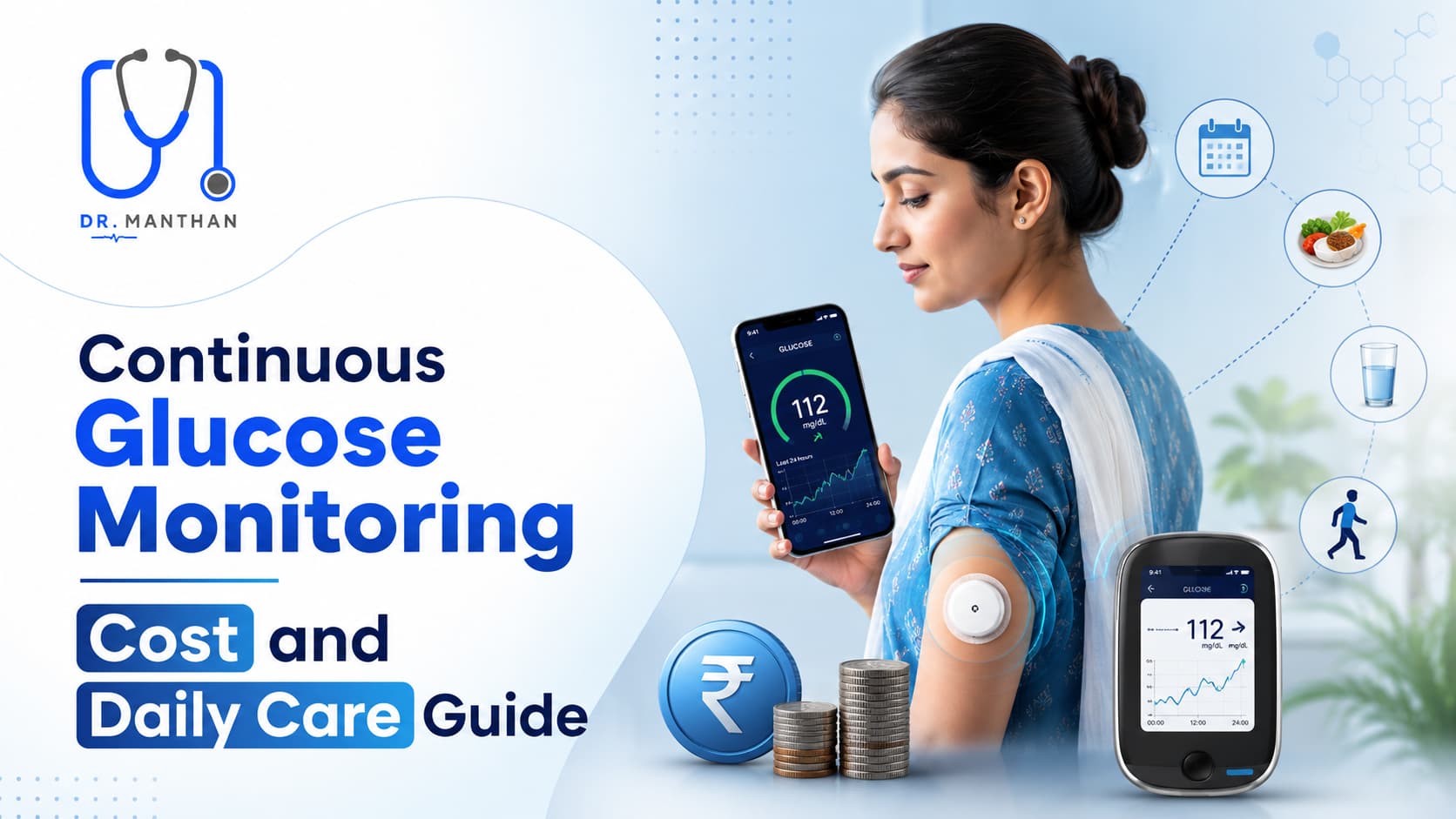
Continuous Glucose Monitoring: India Cost and Daily Care Guide
Managing Diabetes in India
Managing diabetes across India presents very distinct everyday challenges. Our deep-rooted cultural habits and diverse culinary traditions shape our physical health patterns. The rich history of our regional food complicates glucose tracking.
For example, South India relies heavily on carbohydrate-dense rice dishes. North India features rich, wheat-based paranthas. These traditional meals directly impact how our bodies process daily glucose. Glucose is the primary sugar that the human body uses for energy.
Standard tracking relies on traditional finger prick tests. These tests only provide brief snapshots of blood sugar levels. They show your sugar at one single point in time. However, separate readings fail to capture your true daily metabolic curves. They do not show the sharp ups and downs caused by festive sweets during Diwali. They miss the sudden drops in blood sugar that happen during religious fasting periods like Navratri or Ramadan.
The medical landscape has shifted toward advanced tracking tools. These tools provide deeper insights into your personal metabolic trends. Knowing the overall continuous glucose monitoring India cost helps household budgeting for modern metabolic care. Understanding the complete continuous glucose monitoring India cost allows families to access real-time data streams safely. Reviewing the complete continuous glucose monitoring India cost ensures that families can plan their health choices without sudden financial surprises.
Understanding Continuous Glucose Monitoring
A continuous glucose monitoring system is an advanced medical setup. It tracks blood sugar levels throughout the day and night in real time. Standard handheld meters require drawing a drop of blood from the fingertip. This modern wearable device measures sugar levels automatically every few minutes instead.
The technology relies on three interconnected parts. These parts work together smoothly to track metabolic changes. The first component is a small, flexible sensor patch. It is applied directly to the skin. Patients place it on the back of the upper arm or the abdomen. This sensor features a tiny, sterile wire. The wire sits just beneath the surface of the skin.
The second component is a reusable transmitter. It clips onto the sensor patch to read chemical signals. The third component is a receiver. This receiver can be a dedicated handheld reader device. It can also be a secure application on a personal smartphone.
The sub-surface wire measures glucose within the interstitial fluid. Interstitial fluid is the clear fluid layer that surrounds the individual cells of your body. Sugar moves from the blood vessels into this surrounding tissue fluid over time. Because of this movement, there is a natural time delay. This delay lasts roughly five to fifteen minutes. It exists between a standard finger prick blood reading and the sensor reading. This slight time lag is completely normal.
It does not reduce the value of the data trend. Knowing your local continuous glucose monitoring India cost options helps you utilize this stream of health information effectively. Comparing your local continuous glucose monitoring India cost choices helps you find the most affordable medical gear.
Evaluating Continuous Glucose Monitoring India Cost
Understanding the complete financial layout for continuous glucose monitoring India cost is essential for planning long-term care. The overall expenses are divided into two main categories. These are the initial one-time equipment purchases and the regular ongoing costs for replacement parts.
The initial hardware investment involves buying the digital reader or the reusable transmitter setup. This first purchase typically ranges between 3,000 Indian Rupees and 7,000 Indian Rupees. However, many modern systems allow patients to use their personal smartphones as the digital receiver via free downloadable applications. This approach completely eliminates this specific upfront equipment fee.
The ongoing expenses represent the primary factor in long-term financial planning. The sub-surface sensors must be replaced at regular intervals. The typical continuous glucose monitor price for a single disposable sensor patch ranges from 4,000 Indian Rupees to 5,500 Indian Rupees. Each individual sensor is designed by manufacturers to work continuously for a set lifetime. This lifespan is usually either ten days or fourteen days before it turns off automatically.
Therefore, a patient tracking their levels consistently will require approximately two to three new sensors every single month. This frequency brings the estimated monthly continuous glucose monitoring India cost to somewhere between 8,000 Indian Rupees and 12,000 Indian Rupees. Budgeting for this monthly continuous glucose monitoring India cost allows patients to maintain stable records without gaps.
|
Component Type |
Estimated Cost (INR) |
Lifespan / Replacement Frequency |
|
Initial Digital Reader |
₹3,000 to ₹7,000 |
One-time purchase (Optional if using smartphone) |
|
Single Disposable Sensor |
₹4,000 to ₹5,500 |
Replaced every 10 to 14 days |
|
Total Monthly Maintenance |
₹8,000 to ₹12,000 |
Requires 2 to 3 sensors per month |
At present, general medical insurance policies across India do not routinely cover the daily cost of personal wearable sensors for type 2 diabetes management India. Most individuals must pay these expenses out of pocket.
However, some comprehensive corporate health covers and specialized insurance policies provide partial coverage for individuals with type 1 diabetes who face severe medical risks. It is wise to consult your insurance provider to check for any available reimbursement options regarding the ongoing continuous glucose monitoring India cost. Getting professional advice on the continuous glucose monitoring India cost helps you find paths for financial assistance.
Core Metrics for Success
The clinical power of using a real time glucose tracker lies in its analytical reports. It generates an ambulatory glucose profile chart. This chart is a standardized, visual report. It simplifies thousands of individual sugar readings into clear, actionable trends.
Instead of focusing solely on a single fasting or post-meal number, doctors and patients look at three core metrics to evaluate health status. Patients find that analyzing the continuous glucose monitoring India cost helps them contextualize the value of these automated metrics. Understanding the initial continuous glucose monitoring India cost makes the detailed reports even more valuable for daily health tracking.
Time in Range
The first and most critical calculation is the time in range diabetes metric. This metric represents the total percentage of hours in a single day that a patient's sugar levels stay within a safe target boundary. This boundary is typically set between 70 milligrams per deciliter and 180 milligrams per deciliter.
International medical guidelines recommend that most adults keep their blood sugar within this healthy target zone for at least seventy percent of the day. This target equals roughly sixteen to seventeen hours out of every twenty-four hours. Maintaining a high percentage directly protects the organs. It drastically reduces the long-term risk of developing severe diabetes complications, such as nerve damage or kidney issues.
Glycemic Variability
The second major observation is the glycemic variability in Indian diet. This measures the speed and size of blood sugar swings across the day. A diet that relies heavily on refined carbohydrates causes steep spikes followed by rapid, exhausting crashes. Examples include white rice, maida, or sugary chai.
High variability creates systemic inflammation. It damages the delicate inner lining of the blood vessels. This damage occurs even if a patient's overall average blood sugar appears acceptable on standard laboratory tests. Minimizing these wide daily swings by modifying meals is a primary goal of sensor tracking. This makes the continuous glucose monitoring India cost a worthy investment for active preventative healthcare. Investing in the continuous glucose monitoring India cost helps you avoid hidden vascular damage from silent sugar spikes.
HbA1c Correlation
The third metric is the predictive hb1ac control with cgm. An ambulatory glucose profile uses your collective daily averages to calculate an estimated hemoglobin A1c percentage. This percentage reflects average blood sugar control over the past ninety days.
This automatic tracking allows individuals to see how their daily lifestyle modifications are gradually lowering their overall long-term laboratory values. This provides immediate positive reinforcement without needing frequent, uncomfortable visits to a diagnostic laboratory for traditional blood draws.
Practical Steps for Use
Applying and managing a blood sugar sensor patch India is a straightforward process. It can be mastered quickly at home. Following a clean, methodical installation routine ensures that the sensor adheres firmly to the skin. This care provides accurate data readings throughout its entire operational cycle, maximizing the value of the continuous glucose monitoring India cost. Learning the correct steps saves you from wasting your continuous glucose monitoring India cost on patches that fall off early.
Sensor Application
To begin the process, select a flat, fleshy area on the body. The back of the upper arm is the most common and clinically approved location. It is important to avoid areas with deep scars, moles, stretch marks, or visible lumps.
Clean the chosen skin site thoroughly using a fresh alcohol swab. This step removes skin oils, dirt, or lotion residues. Let the skin air-dry completely for a couple of minutes. A damp skin surface will prevent the sensor adhesive from sticking properly. This issue can cause the patch to peel off prematurely.
Unpack the sterile applicator unit according to the specific manufacturer instructions provided in the box. Place the applicator firmly against the prepared skin site. Press the activation button down firmly, and lift the applicator straight away from the arm.
A tiny, automated needle inserts the flexible wire under the skin. It retracts instantly, leaving only the water-resistant adhesive patch and the small plastic sensor housing sitting on the surface of the skin. Most patients report that this application process is completely painless. It feels like a minor, momentary pinch. Knowing how to apply it correctly protects your continuous glucose monitoring India cost investment from accidental early displacement. Proper cleaning methods help preserve your continuous glucose monitoring India cost by ensuring excellent patch adhesion.
Activation and Scanning
Once the patch is attached, activate the sensor by scanning it with your dedicated digital reader or your smartphone application. All continuous monitors require an initial warm-up period. This period usually lasts between one hour and two hours. This time allows the subcutaneous wire to acclimate to the surrounding body tissue fluid.
During this setup period, the system will not display any sugar values. If you are using a flash glucose monitoring India system, you must physically wave your smartphone or reader within a few centimeters of the patch to update your screen graphs. If you are using a fully automated real-time device, the transmitter will push updates over wireless Bluetooth connections to your phone screen every few minutes without requiring manual scanning.
Daily Maintenance
The adhesive patch is designed to be highly water-resistant. This design allows individuals to bathe, shower, and swim normally without damaging the internal electronics. However, when drying yourself with a towel after washing, be careful not to catch the edges of the patch. This care prevents pulling it off the arm.
If you participate in rigorous sports or sweat heavily during hot summer months, you can apply an approved, clear medical overpatch tape directly over the sensor housing. This tape provides extra physical security. Rotate to the opposite arm whenever applying a fresh sensor to give the skin ample time to heal and breathe, protecting the ongoing continuous glucose monitoring India cost from waste. Careful handling allows you to maximize your continuous glucose monitoring India cost by using every patch fully.
Dietary Adaptations for India
The introduction of affordable blood sugar sensor patch India tracking has revealed invaluable insights. It shows how traditional Indian meals alter metabolism. Our daily diets rely heavily on complex mixtures of lentils, grains, and unique cooking oils. Seeing real-time sugar spikes allows for highly personalized dietary changes.
Grain Modifications
White rice and refined wheat flour paranthas frequently cause sharp, immediate blood sugar spikes. These spikes can remain high for several hours. Using a sensor allows individuals to experiment with healthier regional alternatives. These alternatives include switching to foxtail millet, finger millet, or unpolished brown rice.
Observing the real-time graph demonstrates how these ancient grains slow down carbohydrate absorption. This slowing results in a flatter, safer line on your digital reader instead of a sharp spike. Tracking these changes justifies the ongoing continuous glucose monitoring India cost by showing immediate physical benefits. Seeing flat lines on your reader justifies the monthly continuous glucose monitoring India cost directly.
Meal Sequencing
The order in which food is consumed during an Indian meal plays a massive role in regulating post-meal sugar rises. Eating a carbohydrate item by itself causes a rapid surge in glucose. Examples include a plain roti or a bowl of puffed rice.
However, you can modify the sequence easily. Eat a bowl of green fiber salad first. Follow this with protein-rich dal or paneer. End the meal with the carbohydrate portion. The fiber and protein create a slow-digesting gel matrix inside the stomach. Sensor data clearly demonstrates that this simple sequencing method reduces post-meal sugar spikes significantly, even when consuming the exact same amount of carbohydrates.
Festive Management
The numerous festive seasons across India introduce significant challenges for metabolic control. These challenges stem from the widespread abundance of traditional sweets like laddoos, jalebis, and milk-based desserts. Similarly, extended religious fasting periods can precipitate sudden, dangerous drops in blood sugar. This clinical condition is known as hypoglycemia.
Utilizing a continuous glucose monitor allows individuals to navigate festivals safely. For instance, a patient can observe how a small piece of a festival sweet alters their profile. This insight allows them to balance the indulgence. They can take a brisk twenty-minute walk around the neighborhood. They can also adjust their medication dosages under direct medical supervision.
During fasts, built-in sensor alarms alert individuals to early downward trends. This warning allows them to treat low levels safely before dangerous complications develop, underscoring the vital protective power of the continuous glucose monitoring India cost. Real-time safety metrics emphasize the clinical value of your daily continuous glucose monitoring India cost budget.
Frequently Asked Questions
Can I pass through security gates at airport checkpoints while wearing a continuous glucose monitor patch?
Yes, you can safely walk through standard airport walk-through metal detectors and walk past handheld security wands while wearing a continuous glucose monitor sensor patch. However, it is highly recommended to avoid exposing your active on-body sensor to full-body advanced imaging scanners or placing spare sensors through heavy luggage X-ray machines, as the intense radiation can corrupt the delicate internal computer chips. Always inform the airport security officers that you are wearing a continuous medical monitoring device, and carry a valid official prescription note from your treating doctor to ensure a smooth, hassle-free clearance process.
Is it necessary to verify my continuous glucose monitor readings with a standard finger prick test?
Yes, there are specific clinical situations where you must perform a traditional finger prick blood test with a handheld meter to confirm your current status before making treatment decisions. Because sensors read glucose from the interstitial fluid rather than direct blood, you should perform a finger prick check if your sensor graph shows a sudden, unexpected drop or spike that does not match how you physically feel. Additionally, if the smartphone app displays a specific calibration alert symbol or if you suspect your sensor was bumped hard against a door frame, checking your actual blood sugar ensures medical safety.
Can the sensor patch be worn while getting a diagnostic medical scan like an MRI or a CT scan?
No, you must completely remove your continuous glucose monitoring sensor patch and your wireless transmitter from your body before entering an MRI room, a CT scan room, or undergoing any high-radiation medical imaging procedure. The powerful magnetic fields and intense X-ray beams used during these diagnostic medical scans can completely destroy the internal electronic circuitry of the transmitter and cause the sub-surface wire to heat up under the skin. It is best to schedule your diagnostic medical imaging appointments on the specific days when your current sensor patch has reached the end of its lifetime so that you do not waste a new sensor prematurely.
What should I do if my continuous glucose monitor sensor accidentally falls off before its expiration date?
If your disposable sensor patch peels off or gets accidentally knocked off your skin before completing its full ten or fourteen-day operational cycle, you cannot reinsert the same patch, because the internal sterile wire is bent and the adhesive backing will no longer stick safely. You must carefully discard the detached piece and apply a completely fresh sensor to a new skin site. If the sensor fell off within the first few days of application due to a manufacturing defect or poor adhesive quality, you can save the product packaging lot numbers and contact the authorized manufacturer customer support line in India to request a free replacement piece.